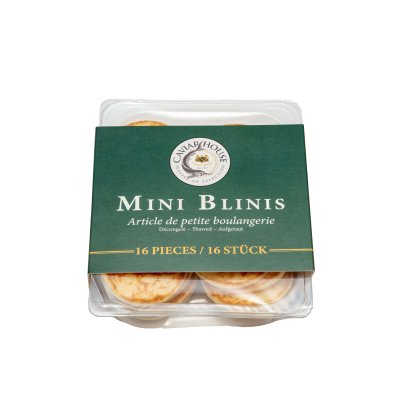


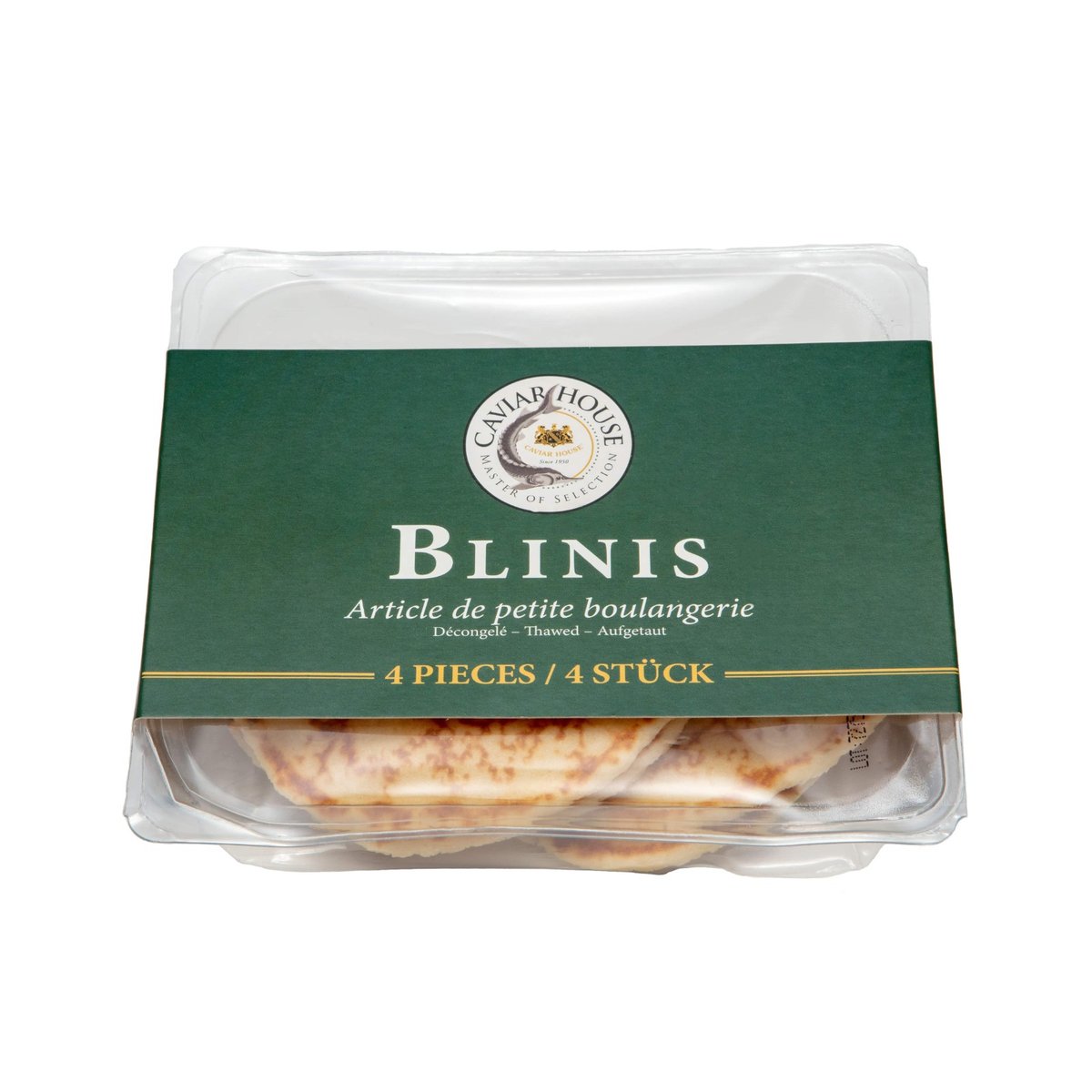

The blini draws its roots from the age-old traditions of Russia, where it was originally made with fermented buckwheat for the seasonal celebrations (Maslenitsa, butter week, marked the end of winter). A solar symbol on account of its round, golden shape, it was inseparable from the great country feasts. It was with the rise of the tsarist houses and the development of caviar at the Russian court that the blini established itself as the natural accompaniment to sturgeon roe.
Today the blini is made with wheat flour to create the same finesse and tenderness. Its neutral taste makes it an ideal accompaniment to exceptional products such as caviar, smoked salmon, taramas and spreads, without masking their flavours.