





FAQ
Our expert answers your questions
What is the difference between the back and the belly of the salmon?
The back, along the top of the salmon, is the firmest and most even part. Its flesh is more structured, more regular, and better suited to fine slicing into medallions. The Tsar Nikolaj fillets and the Caviar House prime fillets come from it. The belly, by contrast, has a more melting, more tender texture. It is the preserve of the Balik Sjomga, in a reimagined Scandinavian tradition.
How do you slice a prime fillet at home?
A long, very well sharpened knife makes it possible to cut fine slices on the diagonal. The technique is to glide the blade parallel to the skin, without pressing, easing the pressure as the cut goes on. For a Caviar House prime fillet, we recommend medallions of around one centimetre in thickness. A few minutes at room temperature before serving make slicing easier and release the aromas.
Can the Balik Sashimi Style be eaten raw?
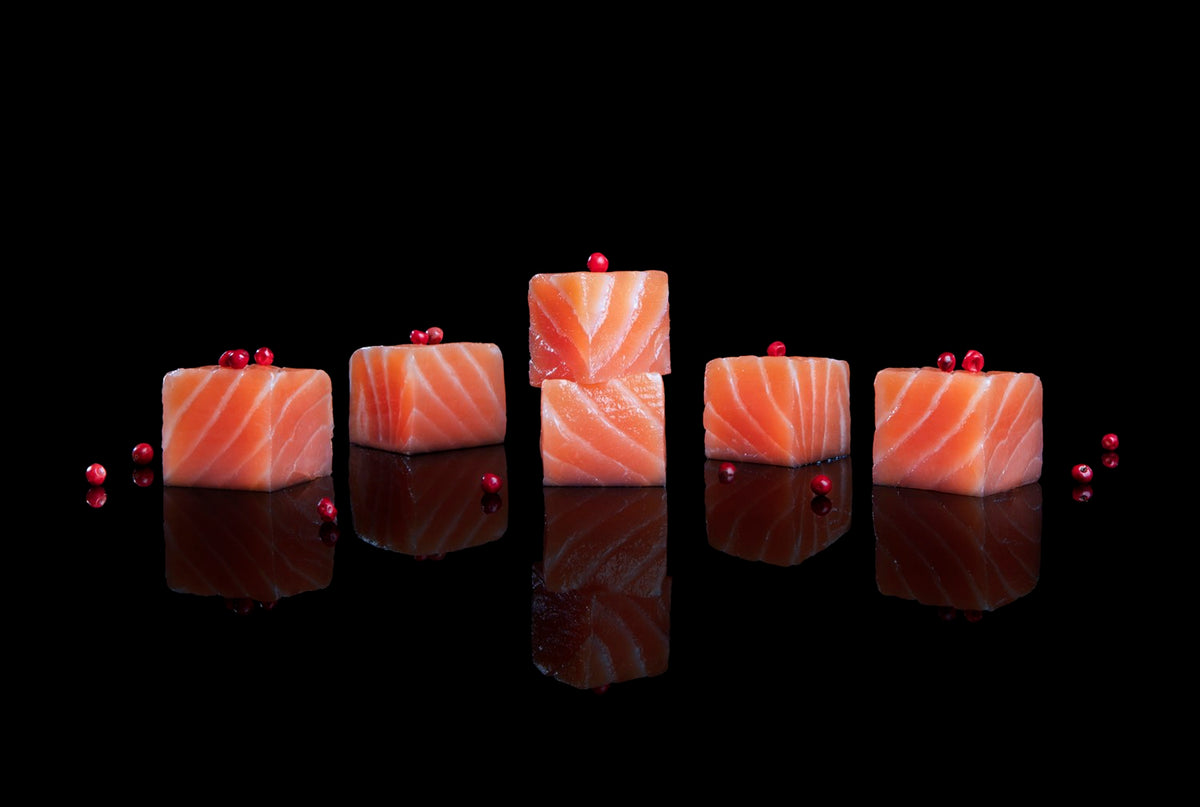
Yes, that is its very purpose. The Balik Sashimi Style is the first unsmoked product from the House of Balik. The Salmo salar from the icy waters of Norway is simply salted on the whole side, then cut according to the classic art of Balik filleting from the back of the fish. It lends itself naturally to Japanese preparations (sushi, sashimi), sliced on the diagonal with a long knife. It is also enjoyed just as it is, showcasing the purity of the salmon.
How much fillet should you allow per person?
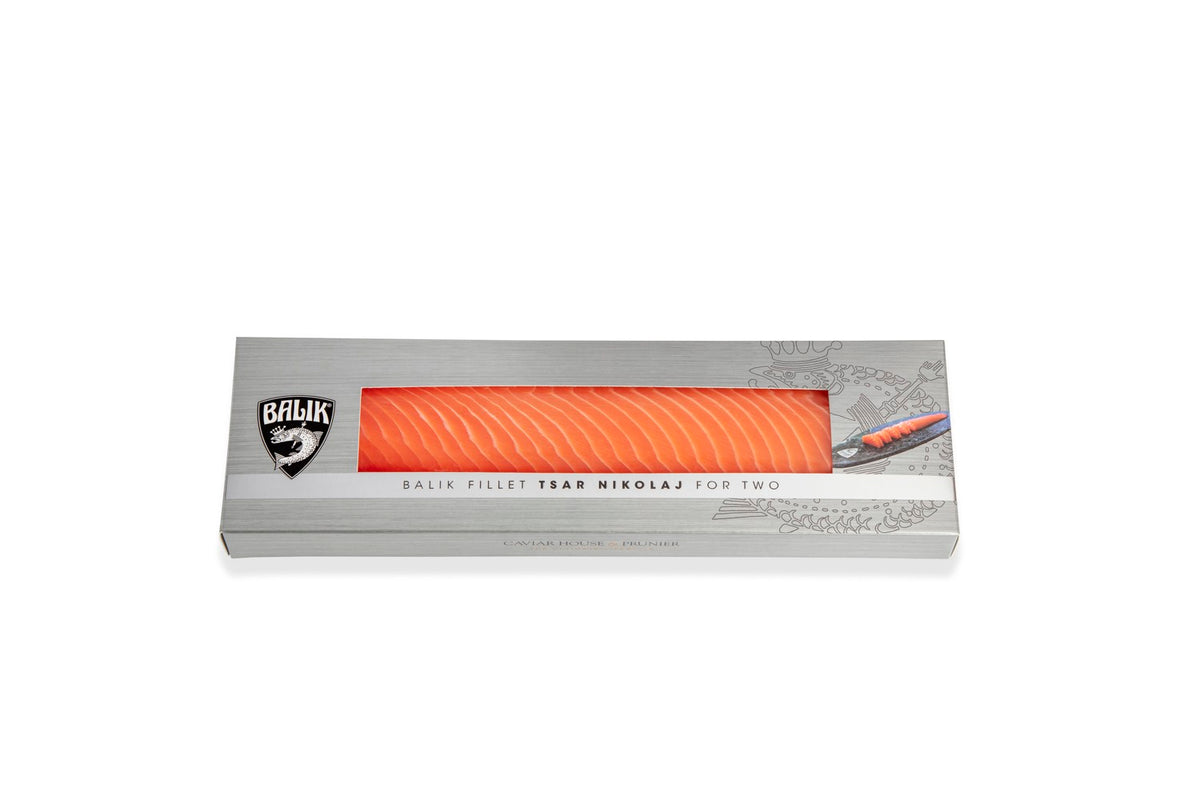
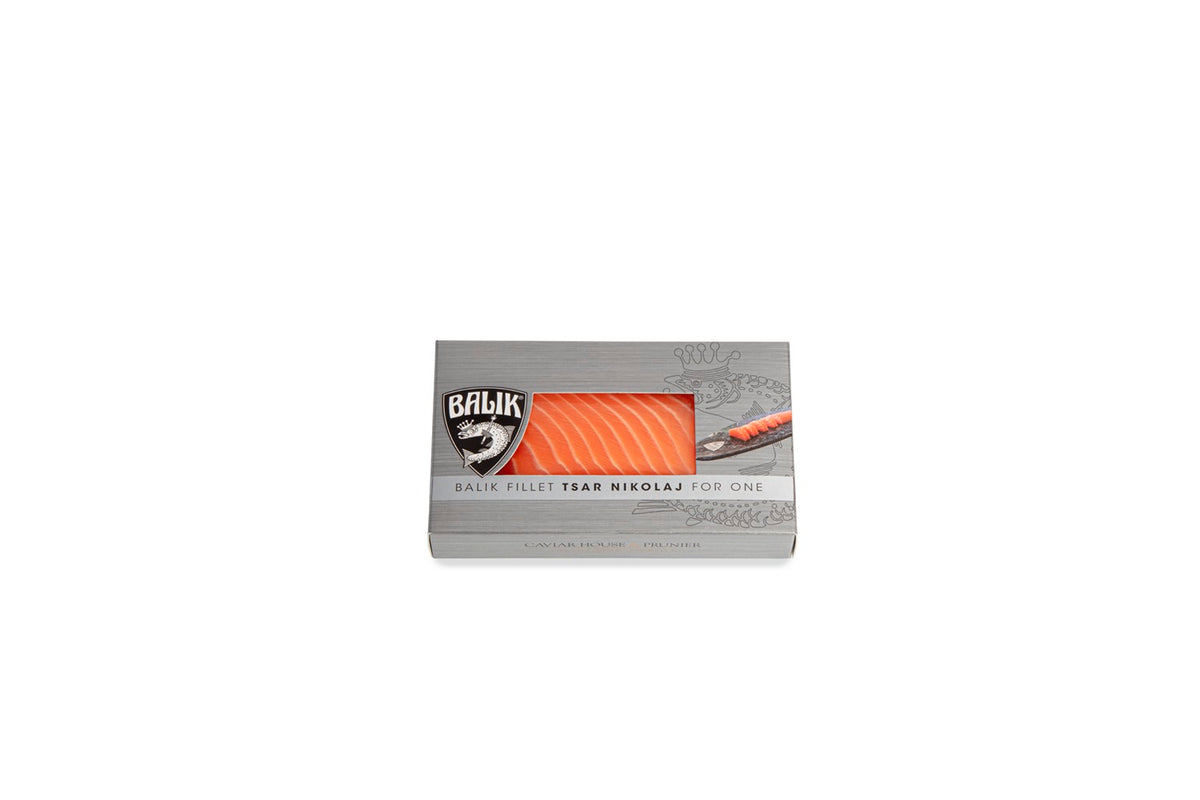
For a tasting served as a starter, allow around 60 to 80 g per guest. For a main course, 100 to 120 g. The individual Balik formats (4 One, 120 g) are perfectly suited to a single portion. The For Two (320 g) is calibrated for two food lovers. For a larger gathering, several Caviar House prime fillets 300 g pair together harmoniously, each able to serve four to five people as a starter.
Find the salmon fillet that is right for you
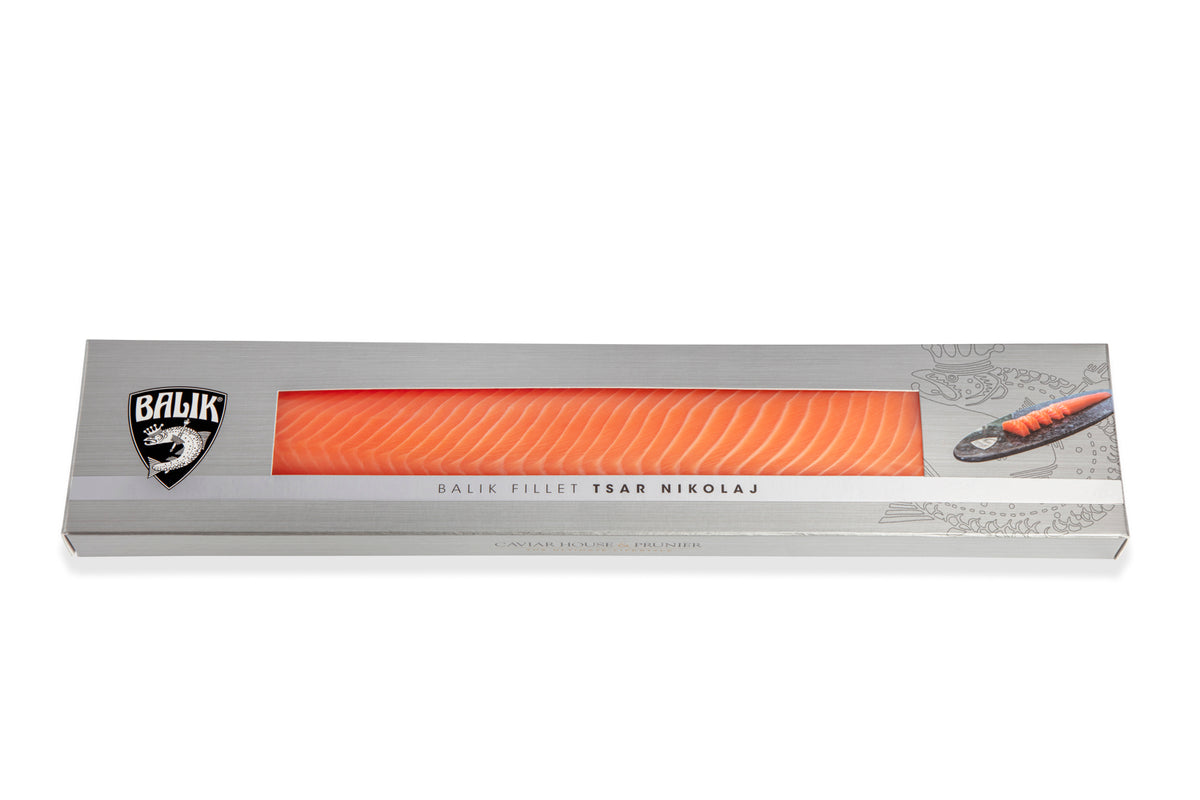
Our range of smoked salmon brings together iconic references with singular identities. First, the Caviar House prime fillet, taken from the upper part of the fish, thicker and more even, slowly smoked at 25°C over beechwood, available in 300 g and 400 g. Alongside it, the Balik Fillet Tsar Nikolaj comes in individual formats (4 One, 120 g), for two (For Two, 320 g) or in a large format (Airport), all smoked to the traditional recipe of the Russian court. The Balik Fillet No. 1 Black Edition, a masterpiece in limited quantity, expresses the very summit of Swiss craftsmanship. On the side of the belly, the Balik Sjomga offers several readings: Tsarevitch, lightly smoked; Tradition, marinated with dill; and Orange, lifted with ginger, orange and honey. Lastly, the Balik Sashimi Style, or Small, lightly salted and unsmoked, opens a new path for raw tasting.
How to choose your salmon fillet
The choice depends on the tasting you have in mind. For a refined starter to share, the Le Borvo prime fillet 300 g lends itself to slicing by hand, into medallions of around one centimetre. For an individual or duo format, the Balik Tsar Nikolaj (4 One, For Two) offer a presentation ready to serve. Should you wish to vary the profiles, the Sjomga bring a surprising marinated dimension. And for a Japanese-style tasting, the Sashimi Style allows a diagonal cut, sashimi fashion.
The fillet, the most precise reading of salmon
To choose a smoked salmon fillet is to discover all the finesse of the product. More precise than a whole salmon, the fillet brings out the quality of the cut, the smoking and the maturation.
For more than 50 years, the House of Le Borvo has worked the prime fillet, the noblest part of the salmon, slowly smoked over beechwood and sliced by hand. For its part, Balik offers several interpretations of the fillet: the Tsar Nikolaj, traditional in taste; the Sjomga, more melting; or indeed the Sashimi Style, unsmoked.
Every slice reflects an artisanal expertise: the selection of origins, measured salting, gentle smoking and slicing by hand. So many details that give each salmon its texture and its character, between the woody taste of the Borvo and the delicacy of the Balik salmon.